
Breathwork Is Trending. Yoga Has Called It Pranayama for Thousands of Years.
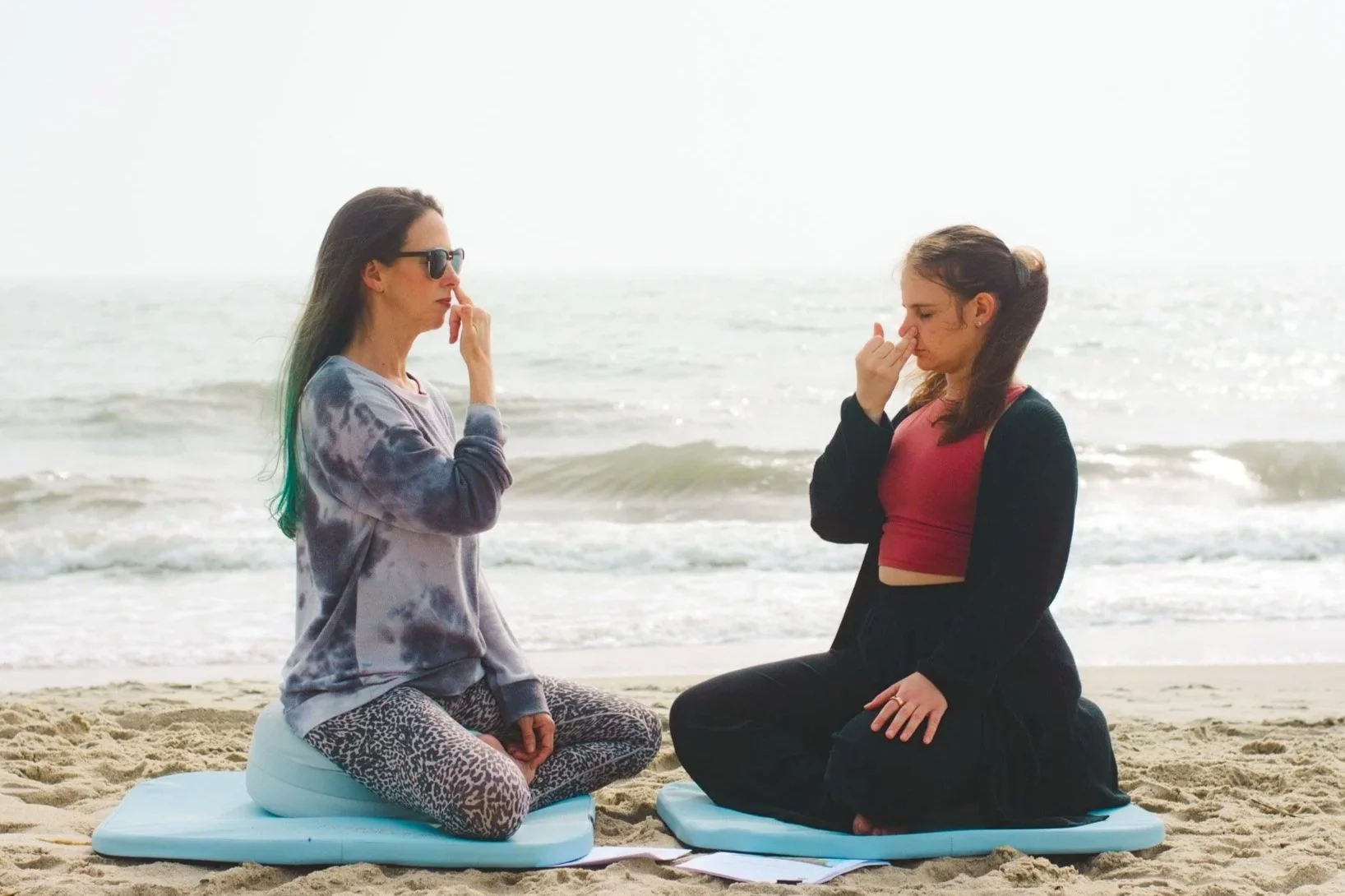
Laurie and Danette practicing the pranayama nadi shodhana also known as alternate nostril breathing on the beach at Tybee Island, GA
By Laurie Kinkel, E-RYT 500 | Tybee Yoga & Healing Arts
Breathwork is everywhere right now.
Wellness retreats, social media, fitness classes, cold plunges, meditation apps. Everyone seems to be talking about the power of the breath.
And I love that more people are discovering it.
But I also think we need to talk about breathwork vs. pranayama and what many of these popular breathing practices actually are.
In yoga, intentional practices of working with the breath and our life force energy are called pranayama. Pranayama isn't simply a trendy add on to yoga, and it isn't something that appeared with the modern breathwork movement. It is an ancient yogic discipline and one of the Eight Limbs of Yoga.
Just like asana, the physical postures most people associate with yoga, pranayama is a practice in its own right.
And just like asana, it deserves to be taught with knowledge, progression, and respect.
What Is Pranayama?
The Sanskrit word pranayama is often translated simply as “breath control,” but that barely touches its meaning.
Prana refers to vital life energy or life force energy. Ayama can mean expansion, extension, control, or regulation. Through pranayama, we intentionally work with the breath as a way of influencing our energy, attention, and state of mind.
Some pranayama practices are beautifully simple and accessible for beginners. Others are advanced practices that traditionally require preparation and guidance. There are up to 70 something differnt pranayama techniques and many books written including “Gheranda Samhita” a Sanskrit text of Yoga in Hinduism that is absolutley amazing and very detailed!
This distinction matters.
Slow diaphragmatic breathing is not the same practice as rapid, forceful breathing. Alternate nostril breathing is not the same as prolonged breath retention. Bhramari, or humming bee breath, has a very different effect and technique than Kapalabhati or Bhastrika.
Yet today, many very different techniques get placed under the single umbrella of “breathwork.”
Is Breathwork Safe? Powerful Does Not Automatically Mean Appropriate
Breathing is natural.
Manipulating the breath is a practice.
That difference is important.
Some pranayama techniques deliberately change breathing rate, depth, rhythm, pressure, or the amount of time we retain the breath. Those changes can have significant physiological effects.
That doesn't make pranayama dangerous. It makes pranayama powerful.
And powerful practices require discernment.
Forceful breathing practices and breath retention are not appropriate for every person, every body, or every situation. Certain practices may need to be modified or avoided for people with particular cardiovascular, respiratory, neurological, eye, pregnancy related, or other medical considerations.
More intensity is not necessarily more healing.
Holding your breath longer doesn't mean you're “better” at pranayama.
Breathing harder doesn't necessarily mean you're releasing more trauma.
And feeling dizzy, tingly, panicked, or lightheaded isn't automatically evidence that something profound is happening.
Sometimes your body is simply telling you to stop.
Breathwork and Pranayama Teachers Need to Understand What They're Teaching
This is where I have concerns about the current breathwork boom.
There are wonderful, highly trained breathwork practitioners doing thoughtful work. But there are also people leading beginners through intense breathing techniques without enough education about physiology, contraindications, yoga philosophy, or how to recognize when someone should stop.
A teacher shouldn't simply know how to perform a breathing technique.
We should understand why we're teaching it.
Who is it appropriate for?
Who might need a modification?
What are the contraindications?
What is the intention of the practice?
How should someone prepare for it?
And perhaps most importantly: when should we not teach it?
Pranayama deserves the same responsibility we expect when teaching physical yoga.
Pranayama: The Missing Link in the Eight Limbs of Yoga
In Patanjali's Eight Limbs of Yoga, pranayama comes after asana and before pratyahara, the turning of awareness inward.
I find that placement fascinating.
In many modern yoga classes, we spend almost the entire practice in asana. Then we suddenly expect ourselves to lie down, become still, quiet the mind, and meditate.
For many people, that's a huge leap.
Pranayama can be the bridge.
The physical practice prepares the body.
The breath begins to draw our attention inward.
And from there, stillness becomes more accessible.
This is one of the reasons I believe pranayama is often the missing link between the physical and mental practices of yoga.
Yoga isn't only about becoming stronger or more flexible.
And pranayama isn't just something we squeeze into the final two minutes of class.
It is part of the path.
Pranayama for Beginners: Start With the Breath You Already Have
One of the most beautiful things about pranayama is that it doesn't have to be dramatic.
You don't have to hyperventilate.
You don't have to hold your breath until you're uncomfortable.
You don't have to chase an altered state.
Sometimes the practice begins by simply noticing.
Notice your inhale.
Notice your exhale.
Notice where the breath moves easily and where it doesn't.
Notice what happens when you gently lengthen the exhalation.
Notice what happens to the mind when the breath becomes quiet.
Before controlling the breath, learn to listen to it.
That is yoga too.
Breathwork May Be the Trend. Pranayama Is the Practice.
I'm happy that the wellness world has fallen in love with the breath.
I just hope that as these practices become more popular, we don't separate them entirely from the wisdom, discipline, and responsibility that have accompanied them for generations.
Pranayama isn't about seeing how intensely we can breathe.
It is about developing a relationship with something that has been with us from our first moment of life and will remain with us until our last.
The breath can energize us.
It can settle us.
It can focus us.
It can teach us to sit with ourselves.
And when practiced thoughtfully, it can become that beautiful bridge between the body and the mind that so many of us are searching for.
At Tybee Yoga & Healing Arts, pranayama is not an afterthought. It is part of how we practice and teach yoga here on Tybee Island and in the Savannah area. Whether we're practicing beside the ocean, working privately with a student, or teaching future yoga teachers, the breath is part of the practice, not simply something happening in the background.
Because yoga was never just about the poses.
And the breath was never just background noise.